
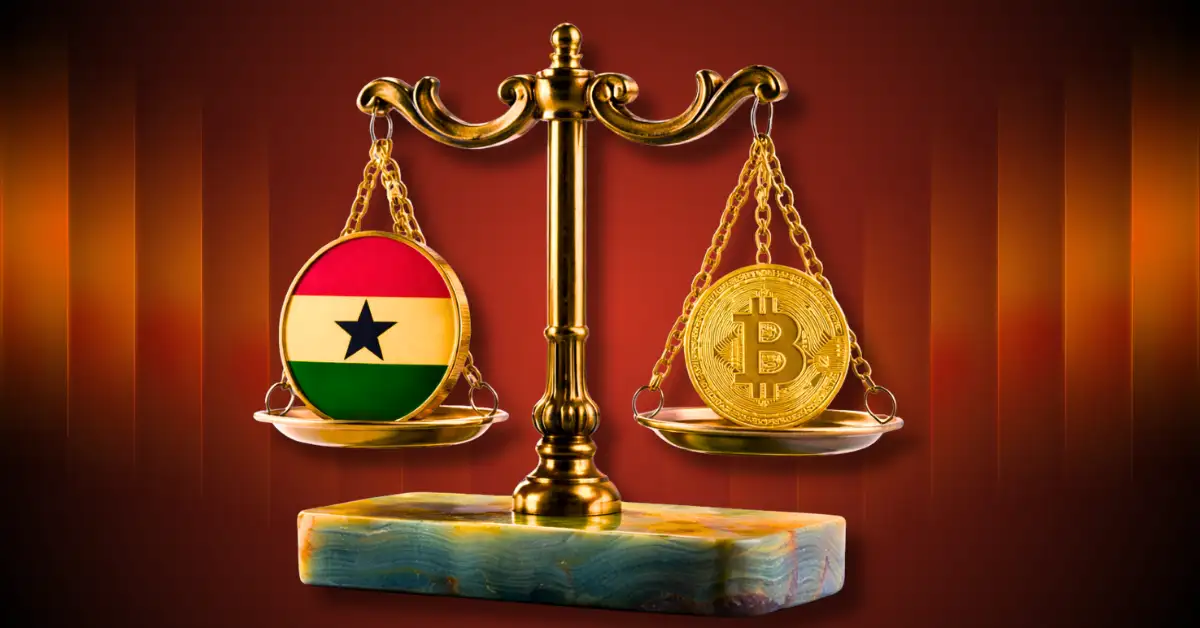
Crypto Trading Is Now Legal in Ghana Under New Law: Details
Ghana has officially made crypto trading legal.
After years of fast-growing but loosely regulated crypto activity, Ghana’s parliament has passed the Virtual Asset Service Providers (VASP) Bill, 2025, giving the country a clear legal framework for digital assets. The move brings crypto trading into the open, placing exchanges and service providers under formal oversight for the first time.
Crypto Trading Is Now Legal in Ghana
The new law legalizes cryptocurrency trading nationwide and introduces licensing and supervision rules for crypto platforms. Bank of Ghana Governor Dr. Johnson Asiama said the goal is to bring an already active market under proper regulation.
The framework ensures that “emerging activity is brought within clear, accountable, and well-governed boundaries,” Asiama said.
For users, the change removes a long-standing gray area.
“Effectively, virtual asset trading is now legal, and no one is going to be arrested for engaging in crypto,” he confirmed.
Why the Government Stepped In
Crypto use in Ghana has grown faster than regulation. About 3 million Ghanaians – roughly 17% of the adult population – already use digital assets, according to central bank estimates. That level of adoption raised concerns around consumer protection, fraud, and the impact on the national currency, the cedi.
Transaction data shows how large the market has become. Crypto activity in Ghana reached $3 billion in the year through June 2024, highlighting why authorities felt regulation could no longer wait.
Regulation, Not a Crackdown
Officials have been clear that the law is not meant to slow innovation. Instead, it introduces compliance rules aimed at reducing fraud and financial crime while allowing the sector to grow.
“These are not just legal milestones; they are enablers of better policies, stronger supervision, and more effective regulation,” Asiama said, adding that progress also requires “responsibility and vigilance.”
The framework is expected to support fintech startups, small businesses, and traders, while also making Ghana more attractive to responsible investors.
Part of a Bigger African Shift
Ghana’s move follows a wider trend across Africa, where governments are choosing regulation over resistance. Kenya recently legalized Bitcoin and other cryptocurrencies, setting clear guidelines for exchanges.
With legal clarity now in place, Ghana joins a growing list of countries recognizing that crypto adoption is already here – and that managing it is better than ignoring it.
Never Miss a Beat in the Crypto World!
Stay ahead with breaking news, expert analysis, and real-time updates on the latest trends in Bitcoin, altcoins, DeFi, NFTs, and more.
FAQs
Yes. Ghana’s VASP Bill, 2025 makes crypto trading legal nationwide and places exchanges and service providers under formal regulatory oversight.
The VASP framework does not automatically impose new taxes, but it gives authorities clearer visibility into crypto activity. This makes future tax guidance or reporting rules more likely as regulators assess the market.
Licensed firms will likely face compliance checks, reporting requirements, and consumer protection standards. Smaller operators may need time or partnerships to meet these obligations.
The law improves oversight and accountability but does not guarantee compensation for losses. Users still carry market and platform risk, even with regulation in place.
Trust with CoinPedia:
CoinPedia has been delivering accurate and timely cryptocurrency and blockchain updates since 2017. All content is created by our expert panel of analysts and journalists, following strict Editorial Guidelines based on E-E-A-T (Experience, Expertise, Authoritativeness, Trustworthiness). Every article is fact-checked against reputable sources to ensure accuracy, transparency, and reliability. Our review policy guarantees unbiased evaluations when recommending exchanges, platforms, or tools. We strive to provide timely updates about everything crypto & blockchain, right from startups to industry majors.
Investment Disclaimer:
All opinions and insights shared represent the author’s own views on current market conditions. Please do your own research before making investment decisions. Neither the writer nor the publication assumes responsibility for your financial choices.
Sponsored and Advertisements:
Sponsored content and affiliate links may appear on our site. Advertisements are marked clearly, and our editorial content remains entirely independent from our ad partners.
About Author