
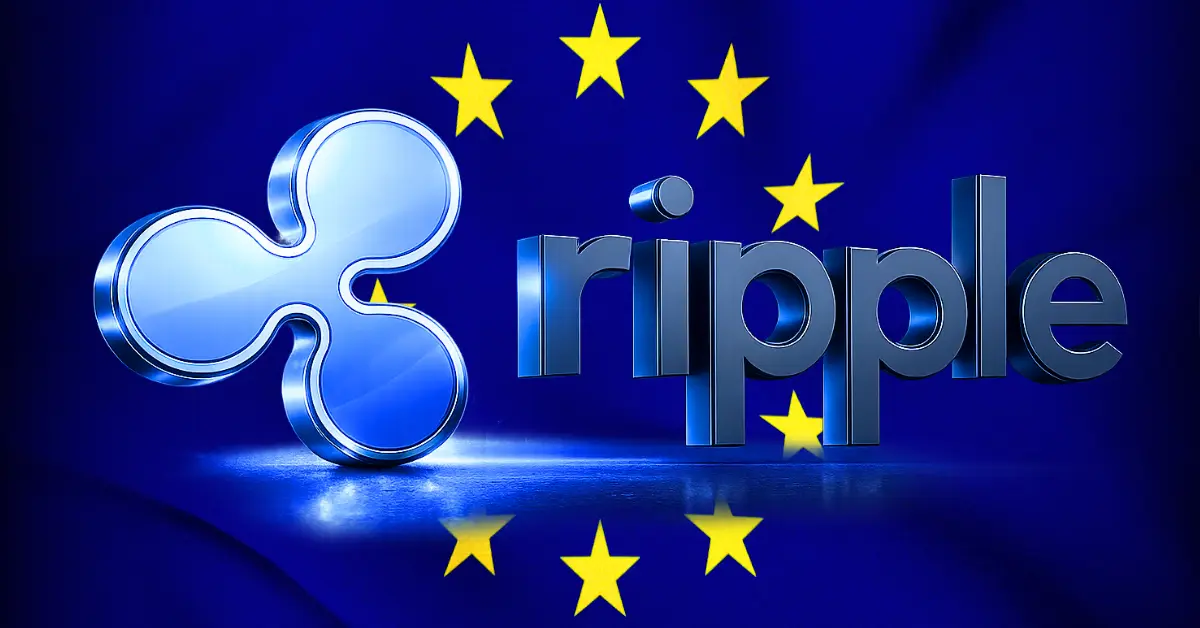
Ripple News Today: Ripple Secures Full EMI License in Europe, Unlocks EU-Wide Payments
Ripple has reached a major regulatory milestone in Europe after obtaining full approval for an Electronic Money Institution (EMI) license from Luxembourg’s financial regulator, the Commission de Surveillance du Secteur Financier (CSSF). This authorization upgrades Ripple’s status from “in-principle” approval to a fully operational license, allowing the company to legally provide regulated payment services across the European Union. The move places Ripple under a unified regulatory framework, enabling it to serve clients across multiple EU member states through passporting rights.
From Conditional Approval to Full Authorization
Ripple first revealed its preliminary approval for the Luxembourg EMI license last month. Since then, the company has satisfied all regulatory, operational, and compliance requirements set by the CSSF, clearing the final hurdle for full authorization. With this approval, Ripple is permitted to issue electronic money and deliver payment services throughout the EU without needing separate licenses in each jurisdiction.
Cassie Craddock, Ripple’s Managing Director for the UK and Europe, described the approval as a key step in strengthening Ripple’s role within European finance. She emphasized that Europe remains central to Ripple’s long-term strategy and that the license enhances the firm’s ability to provide compliant, blockchain-powered financial infrastructure to businesses transitioning toward digital-first payments.
Expanding Ripple Payments Across the EU
The Luxembourg EMI license is expected to accelerate the rollout of Ripple Payments, the company’s cross-border payments solution built for banks, fintech firms, and enterprise clients. Ripple Payments aims to modernize international transfers by improving settlement speed, lowering transaction costs, and increasing transparency compared to traditional correspondent banking systems.
Luxembourg’s status as a preferred hub for regulated financial services makes it a strategic base for Ripple’s EU expansion. While the company has not outlined a specific timeline or named initial markets, the license gives Ripple flexibility to scale its payment services across the bloc as demand grows.
Ripple’s European progress comes alongside recent regulatory wins in the United Kingdom, where the company secured both an EMI license and cryptoasset registration from the Financial Conduct Authority. With the Luxembourg approval included, Ripple now holds more than 75 regulatory licenses and registrations worldwide, positioning it as one of the most heavily regulated firms in the digital asset industry.
Rather than viewing regulation as a barrier, Ripple sees compliance as a competitive advantage as institutional adoption of blockchain-based payments accelerates.
Unlocking Institutional-Scale Capital Flows
Commenting on the broader implications, X user Nzheo highlighted that infrastructure developments like this could unlock as much as $2 trillion in USD and EUR value moving daily. The focus on instant settlement, no pre-funding, and lower costs marks a significant improvement over legacy payment rails. Nzheo added that once a permissioned decentralized exchange becomes operational, real-world assets could begin moving on-chain quickly, potentially opening the door to large-scale institutional capital flows across regulated blockchain networks.
Never Miss a Beat in the Crypto World!
Stay ahead with breaking news, expert analysis, and real-time updates on the latest trends in Bitcoin, altcoins, DeFi, NFTs, and more.
FAQs
It enables faster, cheaper, and more transparent cross-border payments for businesses across Europe using Ripple’s blockchain-powered infrastructure, all under a unified regulatory framework.
The license accelerates Ripple Payments rollout for banks, fintechs, and enterprises by providing a compliant base for faster, cheaper, and more transparent cross-border transfers across the EU.
XRP showed limited short-term price reaction, as broader market conditions dominated, but the news strengthens long-term institutional confidence.
Trust with CoinPedia:
CoinPedia has been delivering accurate and timely cryptocurrency and blockchain updates since 2017. All content is created by our expert panel of analysts and journalists, following strict Editorial Guidelines based on E-E-A-T (Experience, Expertise, Authoritativeness, Trustworthiness). Every article is fact-checked against reputable sources to ensure accuracy, transparency, and reliability. Our review policy guarantees unbiased evaluations when recommending exchanges, platforms, or tools. We strive to provide timely updates about everything crypto & blockchain, right from startups to industry majors.
Investment Disclaimer:
All opinions and insights shared represent the author’s own views on current market conditions. Please do your own research before making investment decisions. Neither the writer nor the publication assumes responsibility for your financial choices.
Sponsored and Advertisements:
Sponsored content and affiliate links may appear on our site. Advertisements are marked clearly, and our editorial content remains entirely independent from our ad partners.
About Author