
Hyperliquid Launches HIP-4 and Targets Polymarket With Zero-Fee Outcome Markets
Key Takeaways:
The fee model is designed to attract volume away from Polymarket and Kalshi. Opening or minting an outcome position carries no fee. Fees apply only when closing, burning, or settling a position. Makers on outcome orders who would normally receive rebates instead pay zero. Staking-aligned discounts, including a potential 20% taker fee reduction, still apply.
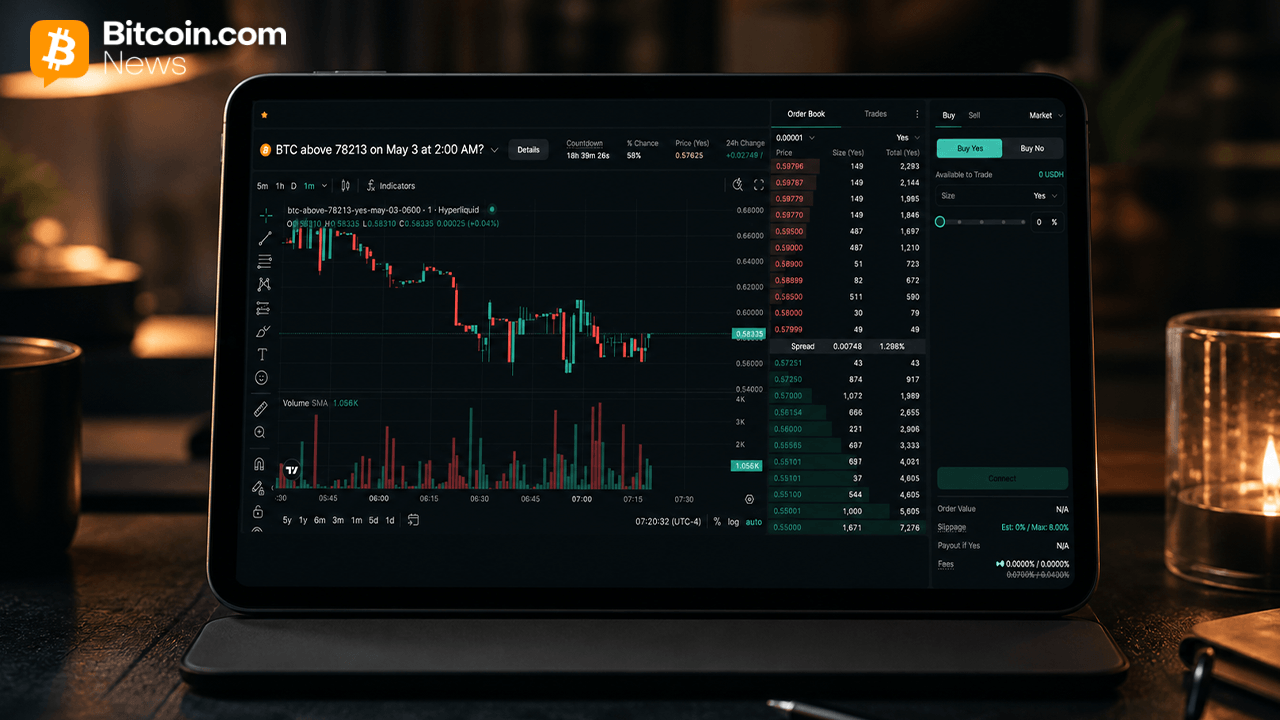
Initial markets are curated and validator-deployed. The first live contracts cover recurring daily BTC price threshold events that reset at 2 a.m. Categories planned for expansion include politics, sports, macro data releases, crypto events, and entertainment.
Builders who want to deploy their own outcome markets must stake 1,000,000 HYPE per slot. That stake is slashable and burned if validators determine the deployer manipulated an oracle, introduced invalid state transitions, or caused prolonged downtime. One staked slot supports rolling and recurring markets, recycling after settlement.
Each market opens with a roughly 15-minute single-price clearing auction. Users submit limit orders during the auction period; no execution occurs until the auction clears at the price that maximizes matched volume. Unfilled orders roll into continuous trading on the same central limit order book powering Hypercore spot and perpetual markets.
The architecture runs natively inside Hypercore, sharing the same matching engine, order types, and approximately 200,000 orders-per-second throughput as all other Hyperliquid markets. Outcome positions sit inside the same wallet as a trader’s perps and spot holdings and factor into unified portfolio margin.
Frontends already integrating HIP-4 include Outcomexyz and Stratium, an aggregator that places outcome markets alongside HIP-3 perpetuals in one interface. Dedicated tracking dashboards, including the loris.tools suite, are expected to add HIP-4 data soon.
Permissionless builder deployment, mirroring HIP-3’s phased rollout, follows once the canonical market phase stabilizes. Volume and open interest from outcome markets count toward protocol-wide fee tiers, meaning active prediction market traders can qualify for lower rates on perpetuals through the same unified account.
About Author